This institution or programme profile is translated from the reviewed Ukrainian source. Fees, admission rules and dates shown are source information, not confirmation of a current intake. Please confirm current conditions with Interavers before applying.
Higher Education in China
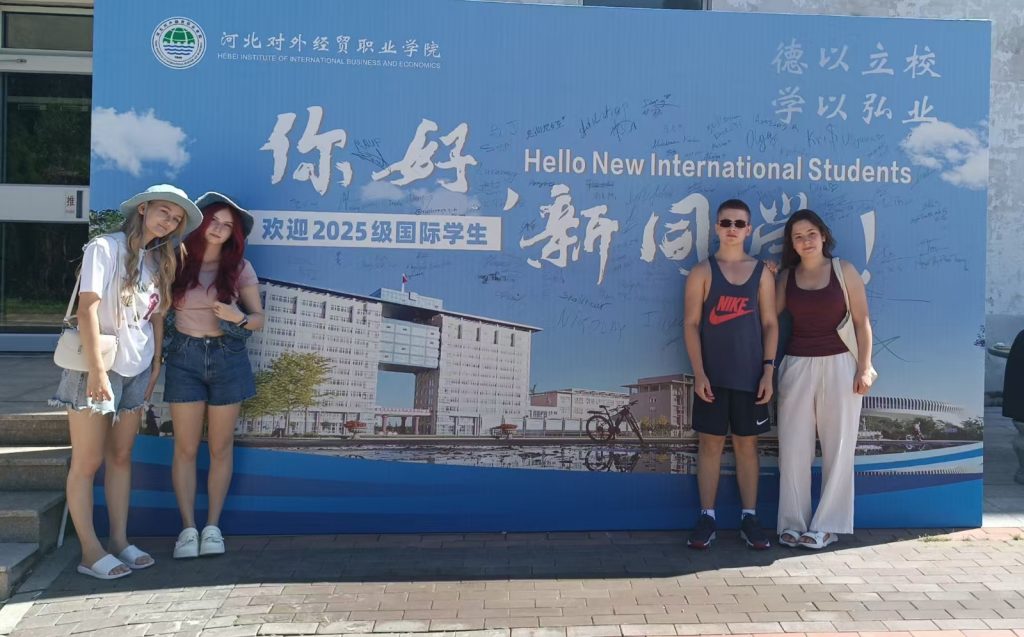
Congratulations to our students who are already studying in China and wish them success! You can make your dreams come true today and start studying abroad!
List of educational institutions:
Jiangsu Vocational Institute of Commerce
Beijing Wuzi University
Changzhou Institute of Technology
Shanghai Polytechnic University
City: Shanghai.
The cost of training is free of charge, according to the grant. Language courses – 18000 yuan / year.
Nanjing University of Information Science and Technology
Guangzhou City Polytechnic
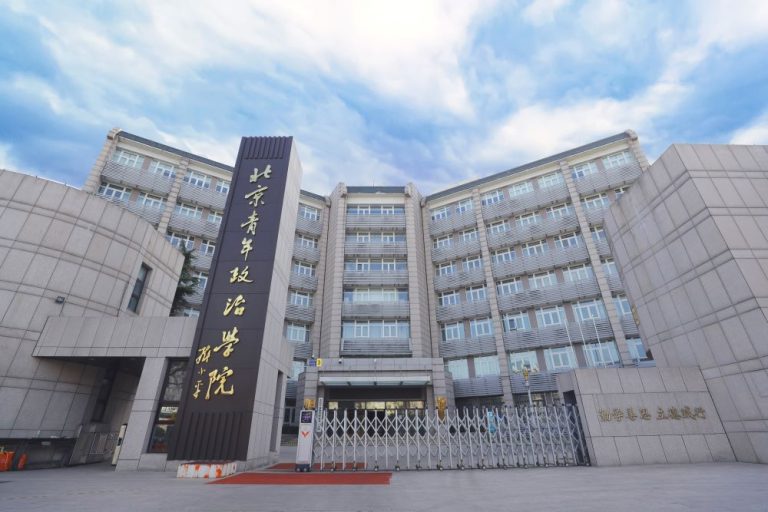
Beijing Youth Politics College
City: Beijing.
The cost of training – 4900 $/year.
Annual language courses – 4400 $/year.
Nanjing Tech University
Hangzhou University of Science and Technology
City: Hangzhou.
Shanghai University of Political Sciences and Law
City:Shanghai
Zhejiang University of Technology
City: Hangzhou
Tianjin Polytechnic University
City: Tianjin
China has remained the country with the most intensive economic development in recent decades, an indisputable fact. Of course, educational programs that are vigorously invested by the Chinese government also fit into the framework of the “new economic miracle”. The growing economy needs highly qualified specialists. Therefore, today’s level of the education system in China is as close to world standards as possible. In China there are 11 universities from the world ranking. Another step was the opening of the doors of Chinese universities for foreign students: from 2000 universities and colleges 450 accept applicants from other countries. Therefore, studying in China can be a very attractive option for foreign students.
Students from different countries of the world study at universities in China – from Korea, USA, Great Britain, Germany, France, Sweden, Japan, Egypt, Ukraine. Now every tenth student in Beijing is a foreigner. Many of them continue to work in China as translators, managers and various specialists.
Approximately half of foreign students study in the humanitarian specialties “Chinese Language and Culture”, “International Business”, “International Economics and Trade”, “Chinese Philosophy”, etc.
Universities of China, as a rule, have a specialization – humanitarian, pedagogical, technical, as well as classical sciences.
China’s educational system is the largest in the world – about 30 million students are enrolled in higher and secondary educational institutions. In 1986, a large-scale education reform was carried out in the country, after which compulsory nine-year schooling was introduced. Today, the level of coverage of compulsory education is 99.7% of the country’s population.
The system of higher education has almost 800 universities and 1600 professional higher education institutions. And it is actively expanding: if in 1978 only 1.4% of young people were students of higher education institutions, today they are 20%! Despite this demand, the Chinese authorities pay great attention to the quality of education.
- ACADEMIC DEGREES AWARDED AT THE UNIVERSITIES OF CHINA:
- Associate Degree: 2 – 3 years
- Bachelor’s Degree: 4 – 6 years (5 or 6 years for medical directions + year of internship)
- Master’s Degree: 2 – 3 years
- Medical Degree: 3 – 4 years
Studying in the specialty for the purpose of obtaining an academic degree includes the following stages: studying at a bachelor’s degree (humanitarian, technical programs – 4 years, medicine – 5 or 6 years), at a master’s degree – 2-3 years. And, finally, training in doctoral studies – 3-5 years – ends with obtaining a doctorate.
If the student has not previously taught Chinese, before entering the university he is invited to take a 1-2 year course of language learning, and then start studying in the chosen specialty.
Universities in China are separate territories – campuses.
Inside them are educational buildings, dormitories, miniature parks, sports facilities, dining rooms, restaurants, shops and other institutions in the field of services.
The number of students and teachers who permanently live in their territory can be from several thousand to two to three thousand people.
Chinese students spend most of their time on campus.
Hostels for foreigners are distinguished by high safety and comfort. Students usually live in rooms one or two, sometimes three or four people. The rooms have everything you need for life and study – Internet, kitchen, bathroom, TV and household appliances.
The cost of accommodation for students per month is $150-200.
Beijing has more than 50 universities that can teach foreign students. We have complete information about all universities in Beijing and about tuition prices and offer admission to universities in Beijing without entrance exams and without knowledge of the Chinese language.
We offer training in Qinghuangao (Hebei Province) on language courses (learn more), in colleges and universities.
Some schools, colleges and universities can enter after grades 7-9 (learn more)
Reviews of the parents of our students in China
“The last few months are very exciting for every family… and a long and unrecognized path for our children ahead.
But now I am very grateful to you for telling me about your programs for three years!
Honestly, I would never trust my child to anyone other than you!
I respect your hard work and am very grateful to have led us from point A to point Qinghuangao.
Now it’s all in the hands of our children.”
“Thank you very much for your love of work, the care of each applicant and their parents.”
“Natalia Viktorivna!!! Thank you very much for your support, excitement and support. You inspire faith and give strength to our children. For them, this is very important now during the adaptation period.
Thank you for your care!”