This institution or programme profile is translated from the reviewed Ukrainian source. Fees, admission rules and dates shown are source information, not confirmation of a current intake. Please confirm current conditions with Interavers before applying.
Higher education in Austria
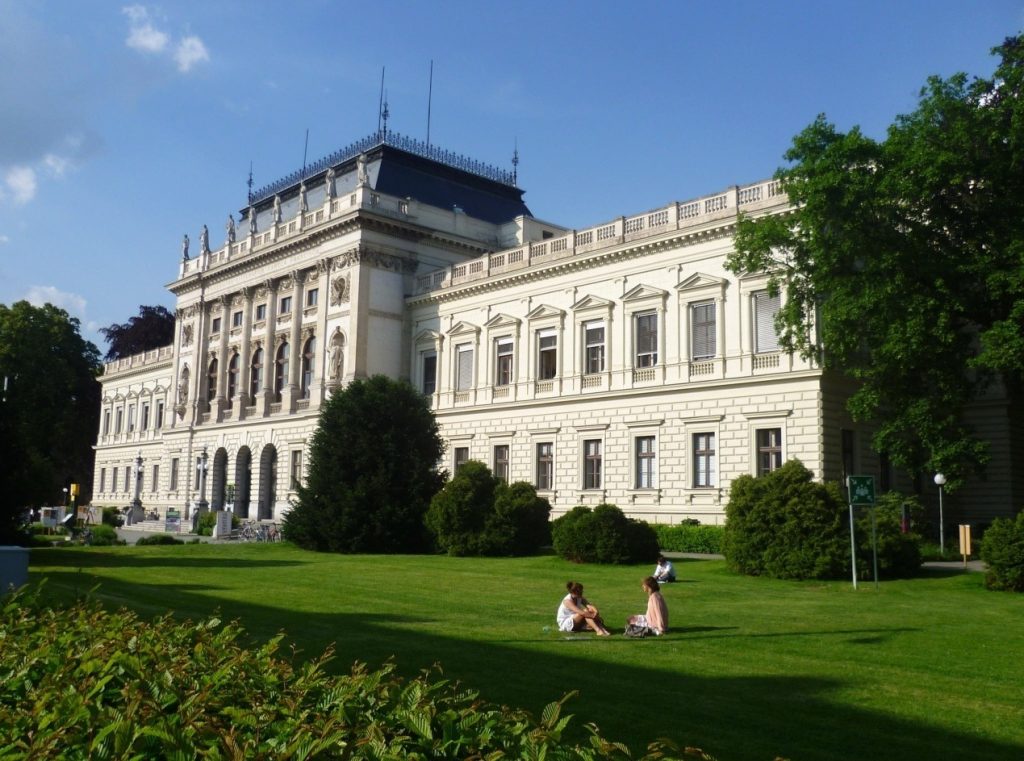
List of educational institutions:
Vienna Agricultural University (Austria, Vienna) Universität für Bodenkultur Wien (BOKU)
Vienna Medical University Medizinische Universität Wien (MUW)
Technical University of Vienna (Austria, Vienna) Technische Universität Wien (TU Wien)
University of Vienna (Austria, Vienna)
University of Applied Arts Vienna
Vienna University of Economics (Austria, Vienna) Wirtschaftsuniversität Wien (WU Wien)
Medical University. Graz, Medizinische Universität Graz
City: Graz.
Technical University in Graz Technische Universität Graz (TU Graz)
Charles and Franz University Graz Karl-Franzens-Universität Graz
University of Music and Theatre in M. Graz Universität für Musik und darstellende Kunst
Specialized universities in Austria
You can get higher education in Austria at 22 state universities (Universität), 21st specialized university (Fachochschule) and 12 private universities (Privatuniversität). Admission to most specialties in state universities takes place without entrance exams. You only need to submit all the necessary and correctly certified documents in time. When entering specialized universities, as a rule, take entrance tests. Depending on the university, they may differ.
One of the most frequently asked questions is: “Is it worth going to Austrian universities? What are they better than domestic ones?”
There is no clear answer here and cannot be. You yourself determine what you want from life, and what ways to achieve this use.
- However, higher education in Austria has a number of advantages:
- It is quoted all over the world, without the need to confirm the diploma.
- Its cost is the same as in many universities in Russia, Belarus and Ukraine.
- Austrian higher education is a ticket for those who plan to live and work in Europe (Austria, Germany, Switzerland).
State and private universities of Austria, as well as specialized universities (FH) offer more than 2000 educational programs.
- These programs are divided into dozens of faculties, among which:
- Humanities;
- economic;
- Legal;
- Social Sciences;
- Culture and art;
- Engineering;
- Medical;
- Pedagogical and others.
- You need to know that there are only two conditions for admission and study at Austrian universities:
- Certificate of maturity or diploma of higher education.
- Certificate of “special university maturity”. This may be a certificate from the university of admission or certificate of completion of the entrance exam or a certificate that you meet the requirements for applicants. In other words, “special university maturity” is the right to study that specialty or related to it at the level of bachelor’s or master’s degree in his country, which the student wants to study at an Austrian university.
- The applicant must have an appropriate document on the availability of knowledge of the German language at the A-2 level.
- Conditions of study at Austrian universities:
- To obtain a higher education in Austria, you must speak German (or English) at the level of C1 and above (less often – B2 and above). If the level of language proficiency is lower than necessary, the state universities of Graz, Vienna and Leoben give the opportunity to take preparatory courses, so-called. Vorstudionlehrgang. Courses run from 1 to 4 semesters. At the time of attending the preparatory courses, you get the status of a “free listener” of the university and gives all the rights and benefits of the student. Successfully completed preparatory courses in German (and/or other subjects that can be prescribed) give the right to continue their studies in the chosen specialty.
- For private universities, the requirements are the same as for state ones. But special universities (FH) may require confirmation of the completion of at least two semesters of universities at home.
- Enrollment in Austrian universities:
- For most specialties, the qualification takes place without exams, the exceptions are creative specialties, medicine, pharmacy, psychology, economics, architecture. Preliminary online registration for all of the above specialties is mandatory.
- And there’s one point you need to know. The fact is that the entrance tests directly depend on the number of applications submitted for the chosen specialty. If the applications are not enough (no selection), the tests are not carried out, and everyone is counted outside the competition. However, if there are many applications, one or more exams can be conducted. In the worst case, tests are carried out in three stages:
1. Interview
2. Online Test
3. Written Test
- Terms of submission of documents to state universities:
- for the winter semester – until September 5;
for the summer semester – until February 5. - After reviewing the documents, with the correct submission and filling in, you receive an invitation from the university, which is used for registration of documents for a stay in Austria. Having received a visa and arrived in the city of your studies in Austria, you personally register at the university and start your studies either on a preparatory course, or directly on the specialty:
the Winter Semester – October 1
the Summer Semester – March 1 - Please note that the terms of submission of documents to special universities (FH) and the beginning of classes in them differ from the terms in state universities.
- Cost of studying in Austria:
- All students, regardless of nationality, pay a student fee to the Austrian Student Union (ÖH) in the amount of 19.20 euros per semester, and students from the CIS countries also pay a university fee, which varies from 363.36 to 745.92 euros per semester, depending on citizenship and the chosen university. However, universities are constantly conducting programs in which residents of CIS countries can get a 50% discount or study for free at all.
For example, State University of Music and Theatre m. Graz exempts from tuition fees for residents of Ukraine under the Focus: Eastern Europe program.
- Student housing in Austria:
- Austrian universities do not provide their students with housing, and this task lies entirely on the shoulders of students and/or their parents.
You have the possibility of living in dormitories, where the cost of a monthly location, depending on your requests, is from 270 to 480 euros (Graz) and from 500 euros (Vienna).
- Work and work for students in Austria:
- As a student of preparatory courses, bachelor’s or first years of diploma programs (1-6 semesters), you have the right to earn 10 hours a week.
If you are studying at a master’s degree or at the last courses of the diploma program (7-10 semesters), you have the right to work 20 hours a week.
Despite the fact that getting an education in any higher educational institution of the city. Vienna (which is also the capital of Austria) is very popular and prestigious, you should understand that life in such a city will be much more expensive than in any other city in Austria. We offer you to get a high-quality and no less prestigious education in the city. Graz, where prices for education, accommodation and other things are not so high. In addition, for those who want to learn German in the language courses in Graz (and we offer you to learn it here) there is a real opportunity to learn the language from a zero level. A distinctive feature of language courses, not only in Graz, but also in Vienna is that you are learning the language from 1.5 to 2 years, but in Vienna, in addition to the fact that they are 1.5 times more expensive, and the maximum period of stay in such courses is 2 semesters.
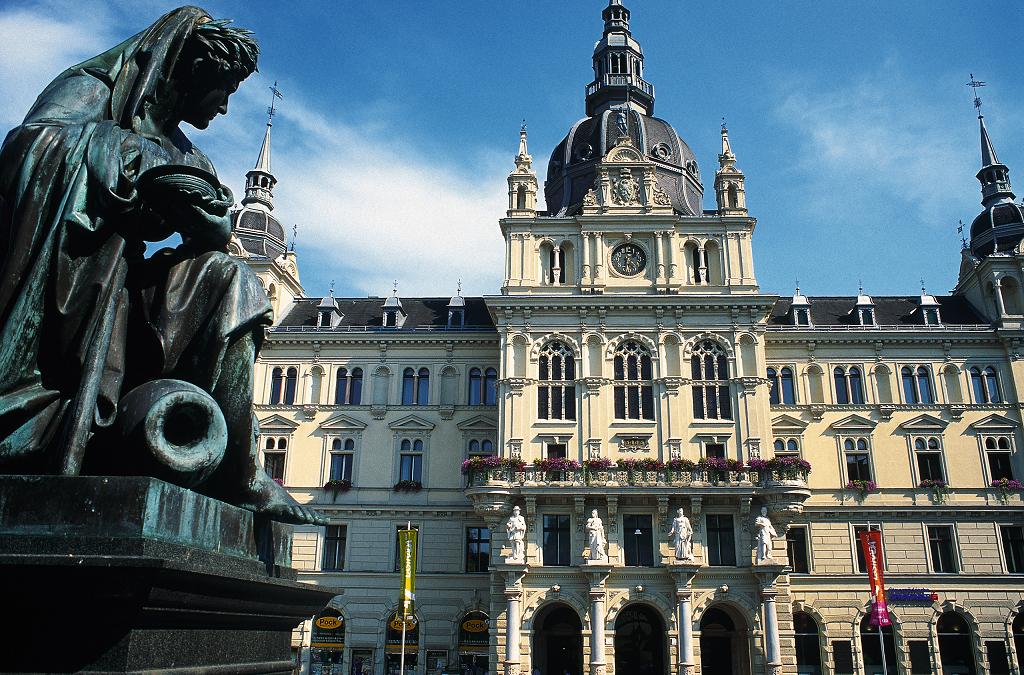
- Graz is THE PERFECT CITY FOR HIGHER EDUCATION IN AUSTRIA, IN WHICH THE BEST CONDITIONS FOR STUDENTS ARE CREATED, BECAUSE:
- Graz is an important economic center of Austria. The main sectors of the economy: automotive, chemical, food and textile, industry, tourism.
- Graz is the capital and heart of the Federal Land of Styria, a well-preserved medieval city. It is known not only as the second largest city in the country, but also as one of the most beautiful cities in Austria.
- Graz is a city of students. One in five of its inhabitants is a student (about 50,000 students live in total).
- Graz is a cosmopolitan city, a city of education and culture, creativity and design. It is home to more than 150 nationalities.
- It takes less than two hours to get to Vienna and Salzburg. The presence of an international airport, compactness and excellent infrastructure make Graz optimal for life, study and work.
- Universities: 4 state universities, 2 universities of applied sciences. Tuition fee: from €750 per semester.
In 2003, Graz was declared the cultural capital of Europe, and in 2011 became a UNESCO design city. Graz has been the first city of human rights in Europe since 2001. In addition, Graz is a city-community of fair trade Fair-Trade and the first culinary capital of Austria.